

Rosie and Iyla's AAC Journey
A CIDE Assistive Technology Clinic Success Story
Jul 12, 2026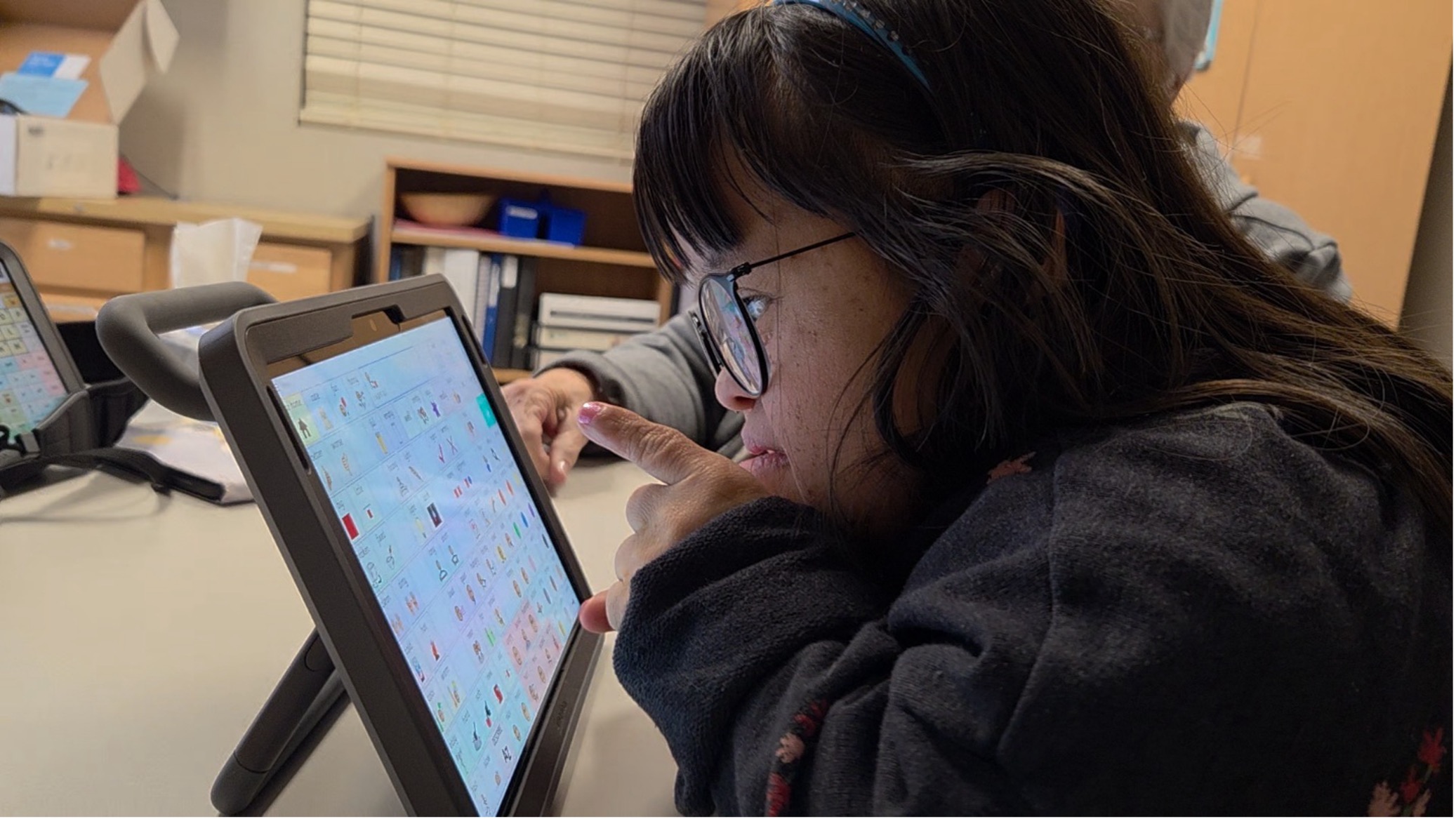
In the Graham household, Rosie, 31, and Iyla (Eye-la), 16, compete with their seven adopted siblings to be heard in their home. Pam Graham, the mother and primary caregiver, reports that the sisters are always together, and despite their age difference, they act like twins. Both Rosie and Iyla present with congenital disabilities that include soft voices with reduced speech intelligibility, which interferes with clear and effective communication.
The sisters were referred to the Center for Innovative Design and Engineering (CIDE) Assistive Technology Clinic to be evaluated for Augmentative and Alternative Communication (AAC) devices by Aleaza Goldberg, MA, CCC-SLP. Rosie has Down Syndrome and Achondroplasia; her speech, often characteristic of Down Syndrome, has reduced intelligibility. Iyla also presents with a form of dwarfism and congenital airway anomalies involving her larynx and trachea, which significantly impact her speech volume and intelligibility. Both sisters are highly verbal communicators, but their speech is not clear enough for unfamiliar people to understand, nor loud enough to be heard in crowded settings.
The AAC evaluation process at the CIDE AT Clinic is designed to provide patient-centered care in identifying the least restrictive and most accessible AAC system to support communication. This includes trials with three different devices and at least two different communication programs, with extended home trials and in-clinic training to assess whether the system supports a wide range of communication needs across settings and with unfamiliar people.
After completing comprehensive evaluations separately, both Rosie and Iyla were found to have strengths in literacy and cognitive skills. Both found that TouchChat, a communication software by Saltillo, augmented their spoken communication for greater success when speaking with unfamiliar listeners. Smaller, lighter devices were recommended to allow the sisters to carry them easily and use them throughout their daily routines and social interactions.
With help from the CIDE AT Clinic, the recommended devices were funded and delivered. Pam, Rosie, and Iyla began weekly appointments for training on using the devices to augment their spoken messages when they weren't easily understood. Of equal importance, Pam received explicit training on programming, customizing, updating, and maintaining the devices, reducing her dependence on the SLP. Goals were set not only to address Rosie's and Iyla's communication needs, but to ensure Pam could train other service providers who come into their lives after CIDE AT Clinic services end.
Success was measured in effective use of the AAC devices to communicate personal needs and preferences, physical and medical status, and requests for assistance. But the most satisfying measure of success was watching both sisters use their devices to tell each other which rides they were most looking forward to on their upcoming trip to Disneyland.