

Student Spotlight
Skyler Brings Lived Experience to Assistive Tech
May 31, 2026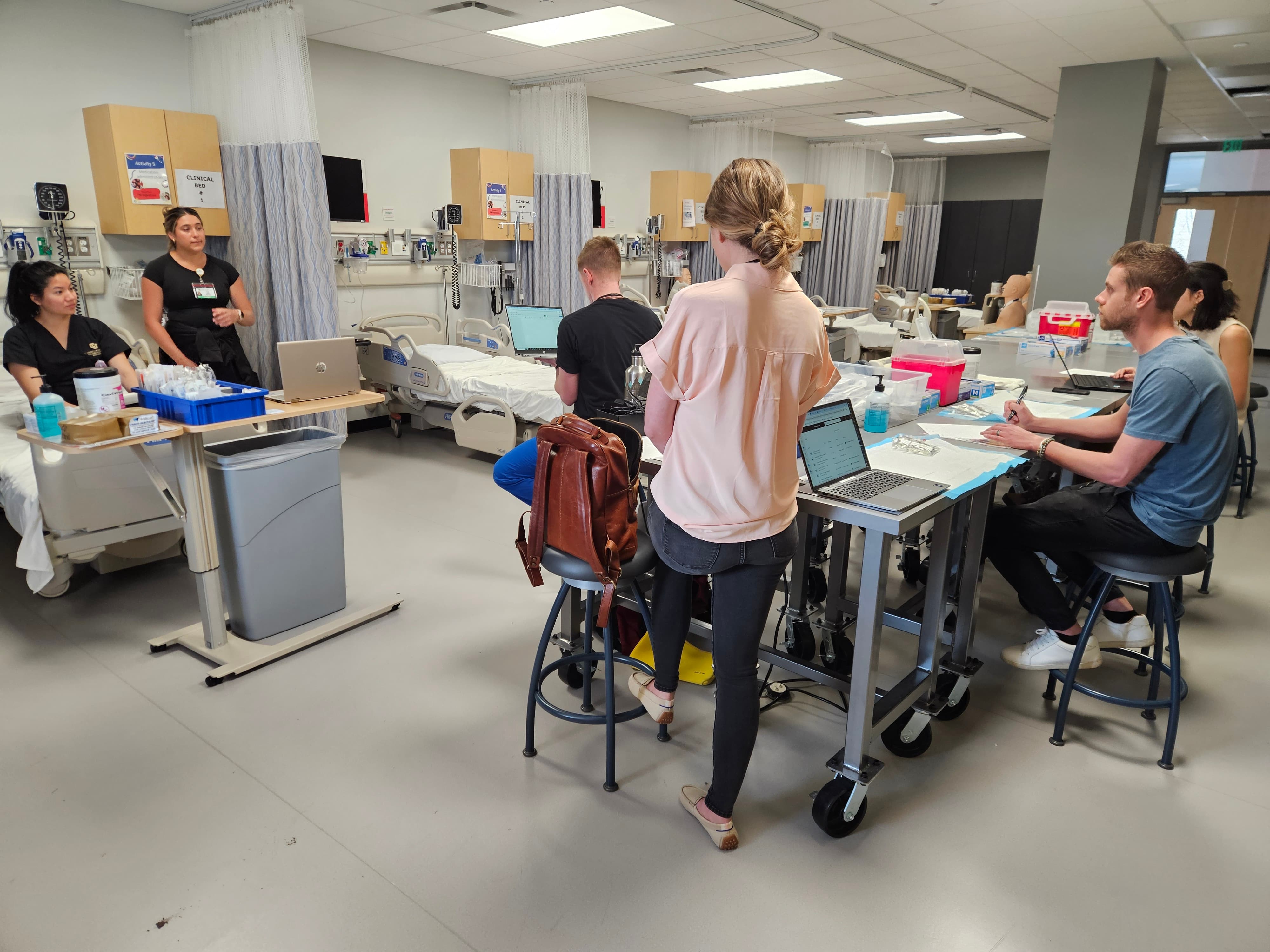
From Sleep Labs to Switch Mounts
Skyler describes himself as a non-traditional student. He earned a psychology degree in 2009, then spent more than a decade in healthcare, first as a home health aide and later as a neurodiagnostic tech running sleep studies and EEGs at hospitals around Boulder. In 2023 he enrolled in CIDE's Assistive Technology and Inclusive Engineering graduate certificate, which prepares students for the national RESNA credentialing exam, while also chipping away at engineering prerequisites one class per semester.
His interest in assistive tech goes back to childhood. His twin younger brothers both have disabilities, and where the family lived, there were no companies making the equipment they needed. Their occupational therapists ended up inventing it themselves. “They needed communication type stuff,” he said, “and the OTs were really the ones to make the technology.” Watching that happen stayed with him.
Building for a Real Person Rather Than a Feature List
One course that stuck with him was usability testing, which let him combine his engineering coursework with the clinical eye he'd developed at patients' bedsides. For his project, he had nursing students test a hospital bed's controls to see whether the buttons, levers, and rail releases actually worked for the people using them. “Somebody did not check to see if this was even going to be useful,” he said. “It's a super great idea, but nobody can operate it.”
He brought the same thinking to his biggest project in the program: an AAC wheelchair mount for a nonverbal student. Before the mount, the student kept his device in his backpack and had to wait for someone to remember to set it up. Skyler built a mount with an actuator switch so the student could raise the device to communicate or move it aside to make eye contact. He worked closely with the student's mother on the positioning, so people would face the student instead of crowding around his equipment. “So he can have that human interaction,” Skyler said, “and be able to say what he wants to say.”
“Nothing About Us Without Us”
Skyler's approach took shape well before he enrolled in the CIDE graduate certificate program. In his twenties, he worked with disability rights lawyers who taught him to notice when people were included on paper but ignored in practice. “You're not seeing the person,” he said. “It's just a human right.” When asked whether he agreed the program has lived up to that value, he didn't hesitate: “Yeah, I do. Very much.”
His advice for other non-traditional students considering the field is to worry less about clinical credentials and more about listening. “Having experience listening to what people are actually saying versus what's in a book — I think that's a big part of it.” Add some creativity, he said, and the work starts to feel like play: “Somebody is asking for help and you get to try to solve it. It's so fun.”
What's Next
Skyler finishes his clinical rotation this semester at Craig Hospital, where he'll work with their assistive technology team. The certificate's capstone clinical experience places every student at a working clinical or industry site. Down the road, he wants to design adaptive outdoor gear: affordable equipment for camping and snowshoeing without the specialty price tag of adaptive sports equipment. For now, he's working full-time, raising his 15-year-old son, and taking one class per semester until his engineering prerequisites are done.
We'll check in with Skyler next year to see where he's landed.
Interested in the program?
The Assistive Technology and Inclusive Engineering graduate certificate is open to students from clinical, engineering, and non-traditional backgrounds — many, like Skyler, study part-time while working. Coursework covers rehabilitation and assistive technology, device design, human factors and usability testing, and mechatronics, and can prepare you to sit for the national RESNA certification exam.
Learn more about the certificate · Apply now · Questions? Contact CIDE at 303-315-1280